The Ultimate Guide to Walking the Costa Vicentina (Portugal)
Written by Sérgio Marques, Founder & Route Designer, Top Walking Tours Portugal
June 15, 2026
949 words
5 minutes
The Costa Vicentina, along Portugal’s wild southwest coast, is one of Europe’s most remarkable walking destinations. Stretching through the Alentejo and Algarve regions, it offers a rare combination of untouched landscapes, dramatic cliffs, and authentic village life.
At the heart of this region lies the famous Rota Vicentina, a network of long-distance walking trails that follow both the coastline and the inland countryside.
This guide is your complete overview of walking the Costa Vicentina, from routes and highlights to practical planning. For a broader introduction to walking holidays across the country, you can also explore our complete guide to walking tours in Portugal, which helps you understand how this region fits into the wider Portuguese walking experience.
Why Walk the Costa Vicentina?
Unlike many coastal destinations in Europe, the Costa Vicentina remains largely unspoiled. The walking experience here is defined by:
- Rugged Atlantic cliffs shaped by wind and waves
- Endless sandy beaches and hidden coves
- Traditional fishing villages with slow rhythms of life
- A protected natural park ecosystem
The region is part of the Southwest Alentejo and Vicentine Coast Natural Park, preserving one of the last stretches of wild coastline in southern Europe.
If you want a more detailed perspective on what makes this region special, see our article on 5 reasons to Visit the Costa Vicentina.
Understanding the Rota Vicentina
The Costa Vicentina is best explored on foot through the Rota Vicentina, a network of walking routes that includes:
- The Fishermen’s Trail (coastal route)
- The Historical Way (inland route)
- Several circular day walks
Together, these routes form a vast network of over 700 km of trails across the southwest of Portugal.
The Fishermen’s Trail (Trilho dos Pescadores)
The most iconic route, the Fishermen’s Trail, runs along the coast for approximately 226 km, from São Torpes to Lagos.
It follows old paths used by fishermen to access remote beaches and offers:
- Constant ocean views
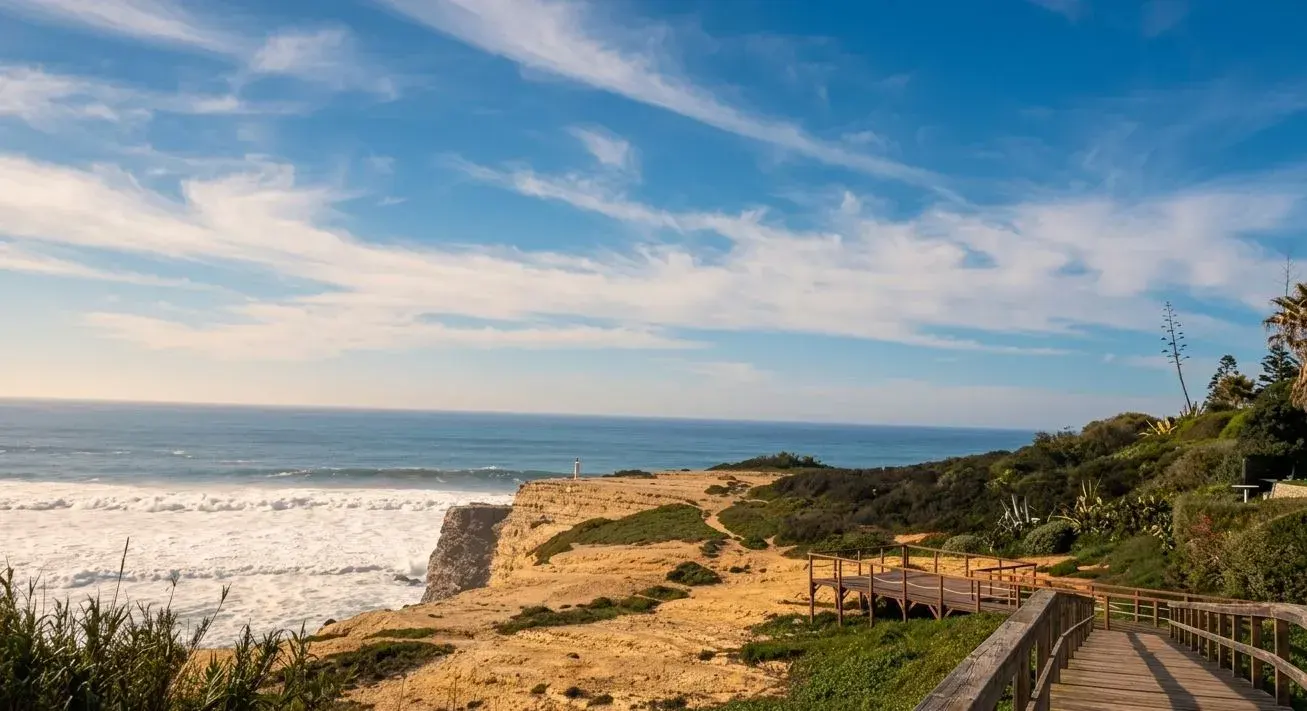
- Cliff-top walking with dramatic drops
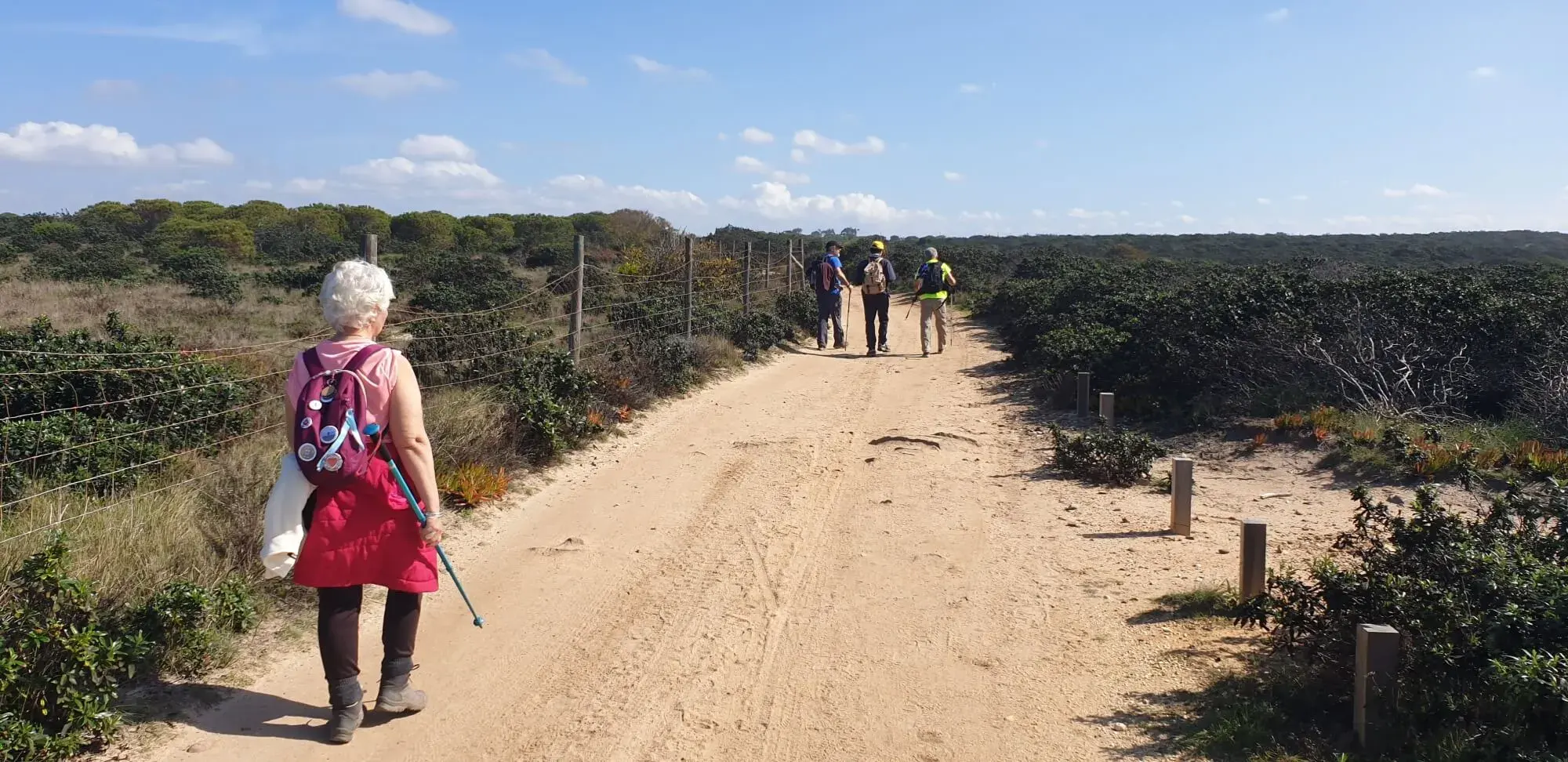
- Sandy terrain that makes walking more demanding
- Access to small coastal villages
It is widely considered one of the most scenic coastal hikes in Europe.
What Makes Walking Here Unique
Walking the Costa Vicentina is not just about landscapes, it is about contrast and rhythm.
1. A constantly changing coastline
Every day looks different: dunes, cliffs, beaches, rivers, and farmland all appear along the route.
2. A balance between wild and accessible
Even though the scenery feels remote, villages appear regularly, offering accommodation and local food.
3. A slower, more authentic experience
Unlike the busy Algarve resorts, the Vicentina Coast preserves a quieter, more traditional atmosphere.
For a deeper look at what lies beyond the obvious coastal scenery with hidden treasures.
Best Places Along the Costa Vicentina
Some standout locations along the route include:
- Porto Covo – a classic starting point with small coves
- Vila Nova de Milfontes – where river meets ocean
- Zambujeira do Mar – dramatic cliffs and viewpoints
- Odeceixe – one of Portugal’s most unique beaches
- Aljezur & Arrifana – wild surf coast landscapes
- Sagres & Cabo de São Vicente – the “end of Europe”
These locations reflect the diversity of the coastline, from gentle Alentejo landscapes to the raw, wind-shaped cliffs of the Algarve.
When Is the Best Time to Walk?
The Costa Vicentina has a mild Atlantic climate, but timing matters for walking.
Recommended seasons:
- Spring (March–May) – wildflowers and fresh landscapes
- Autumn (September–October) – warm temperatures and fewer crowds
These seasons offer the best balance between weather and experience.
Things to consider:
- Summer can be hot and busy, with temperatures above 30°C
- Winter is quieter but can be windy and rainy
- Coastal wind is a constant factor year-round
How Difficult Is the Walk?
Overall difficulty is moderate, but conditions are unique.
Key challenges:
- Long sections of sand (physically demanding)
- Exposure to sun and wind
- Cliff paths requiring attention
Despite this, the route is considered accessible with basic fitness, and stages can be adapted or shortened.
Where to Stay Along the Route
One of the strengths of walking the Costa Vicentina is the availability of accommodation in small towns and villages.
Options typically include:
- Boutique guesthouses
- Small rural hotels
- Family-run accommodations
Self-Guided vs Guided Walking
The Costa Vicentina works particularly well for self-guided walking thanks to:
- Clear trail markings
- Regular accommodation stops
- Available luggage transfer services
Guided experiences, on the other hand, offer:
- Local insights into nature and culture
- More structured itineraries
- Additional support
Both approaches are valid, it depends on whether you prioritise independence or interpretation.
Practical Planning Tips
Before walking the Costa Vicentina, keep in mind:
- Carry enough water, sections can be remote
- Start early to avoid heat and wind
- Respect the fragile natural environment
- Follow marked trails (protected park area)
- Book accommodation in advance (especially in high season)
The route is well marked with colour-coded signs, making navigation relatively easy.
Is the Costa Vicentina Right for You?
This destination is ideal if you are looking for:
- A coastal walking route with real wilderness
- A multi-day hike without extreme altitude
- A combination of nature, culture, and simplicity
- A quieter alternative to more crowded European trails
It may not be ideal if you:
- Prefer lush green landscapes year-round
- Are uncomfortable with heights or cliffs
- Expect luxury at every stage
Final Thoughts
Walking the Costa Vicentina is not about ticking off landmarks, it’s about immersing yourself in a raw, elemental landscape shaped by wind, ocean, and time.
It is one of the few places in Europe where you can walk for days along the coast and still feel like you have discovered something authentic and untouched.